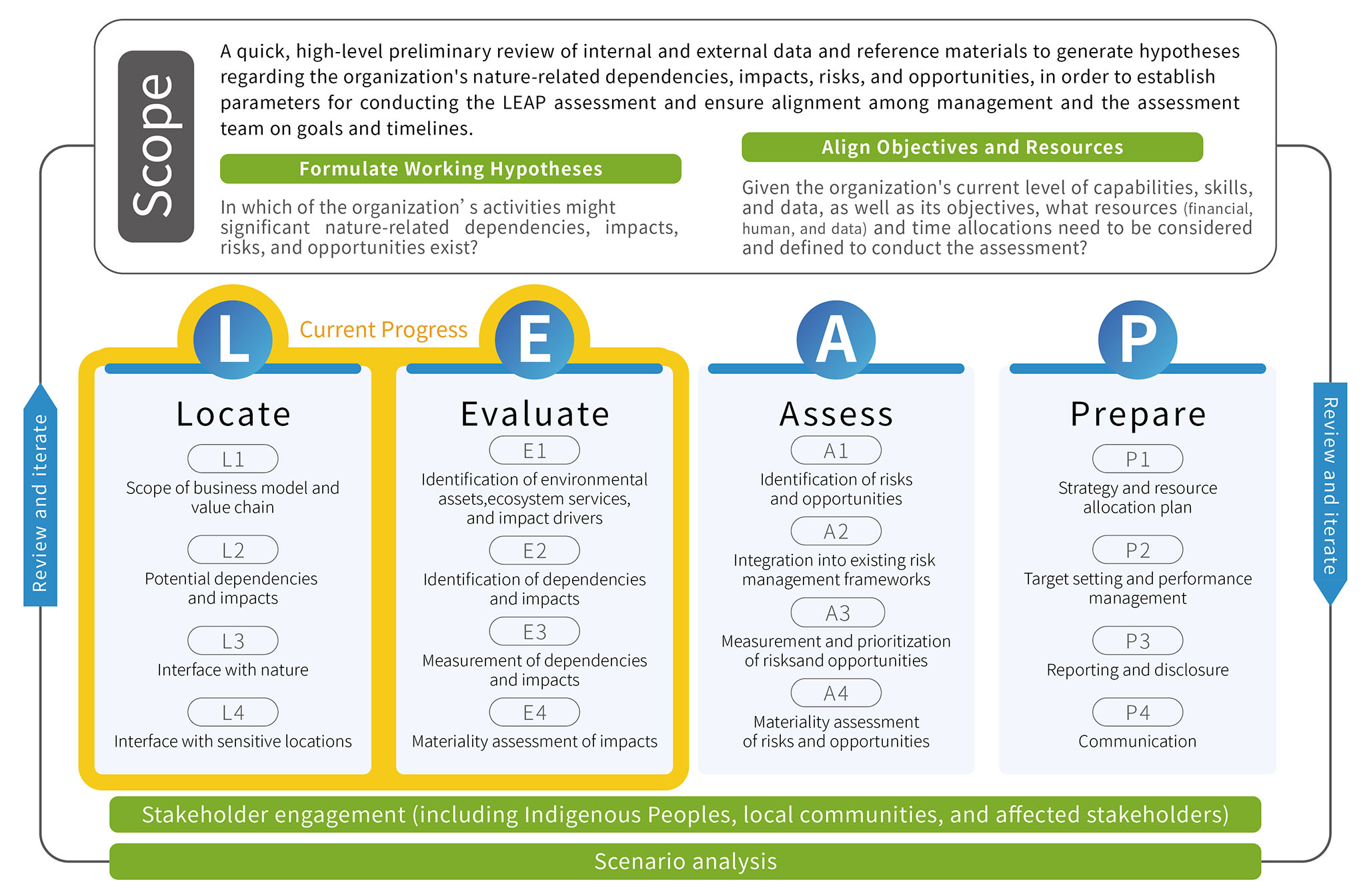
TaTun is committed to coexisting harmoniously with nature. In proactive response to global biodiversity trends and nature-related financial risks, the Company has officially initiated its TNFD assessment pathway. The content disclosed on this webpage represents the preliminary data collection and site-level spatial analysis of nature-related risks (following the Locate and Evaluate phases of the LEAP methodology).
By utilizing science-based local data, we assess the dependencies and impacts of our operational sites on nature, laying a solid foundation for the future establishment of a comprehensive governance framework across TNFD’s four core pillars.
LEAP Assessment Framework: Scope and Steps
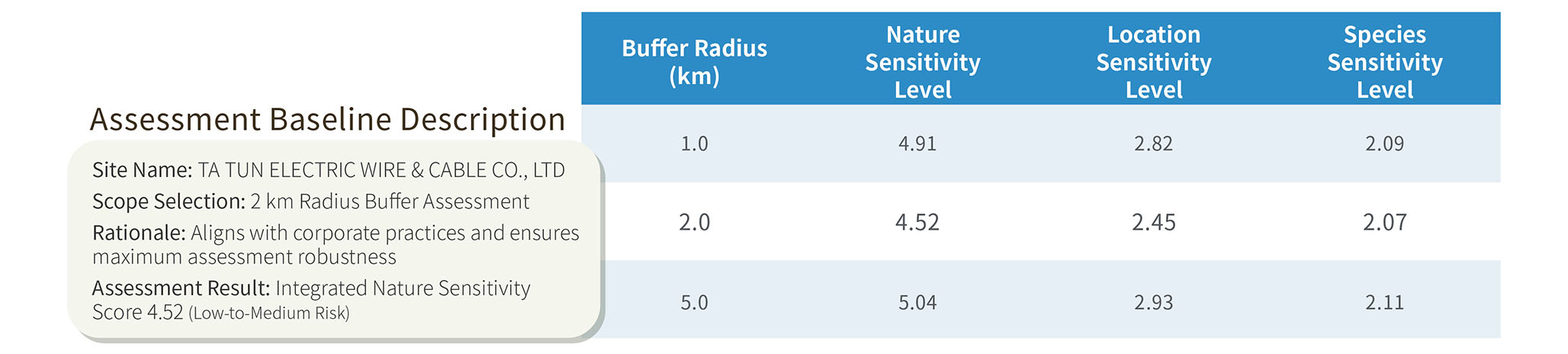
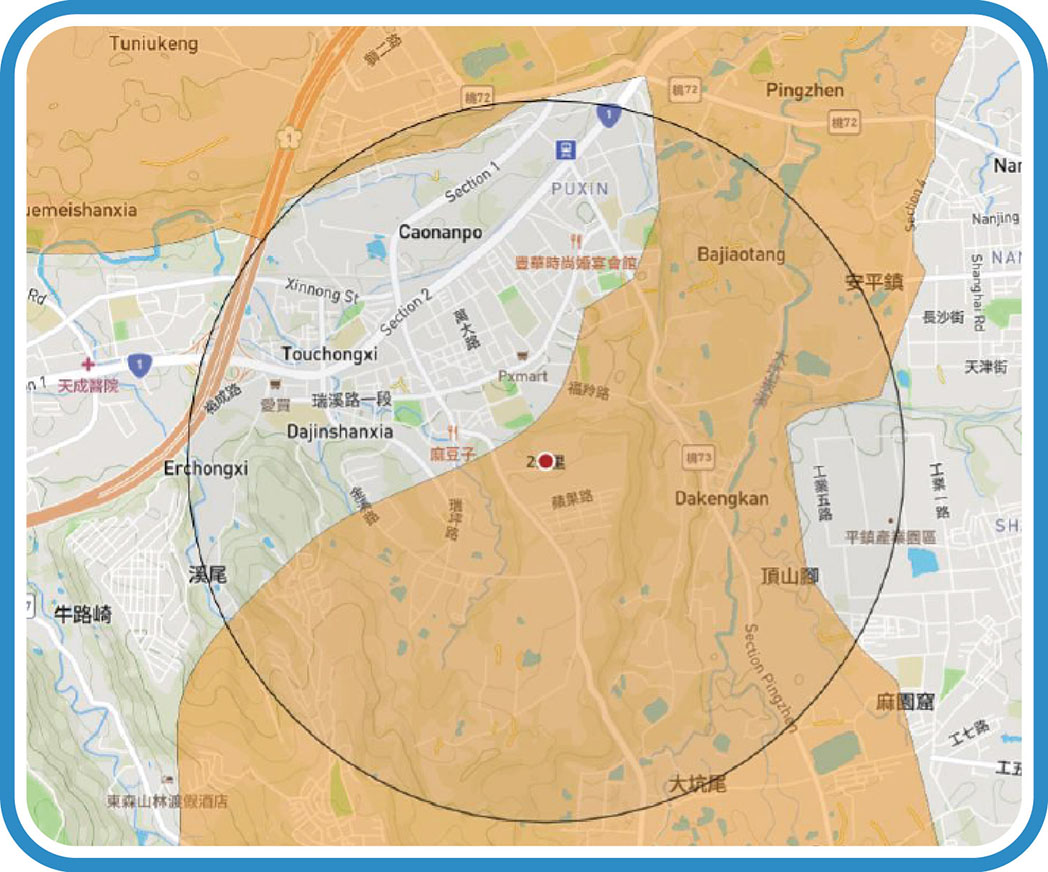
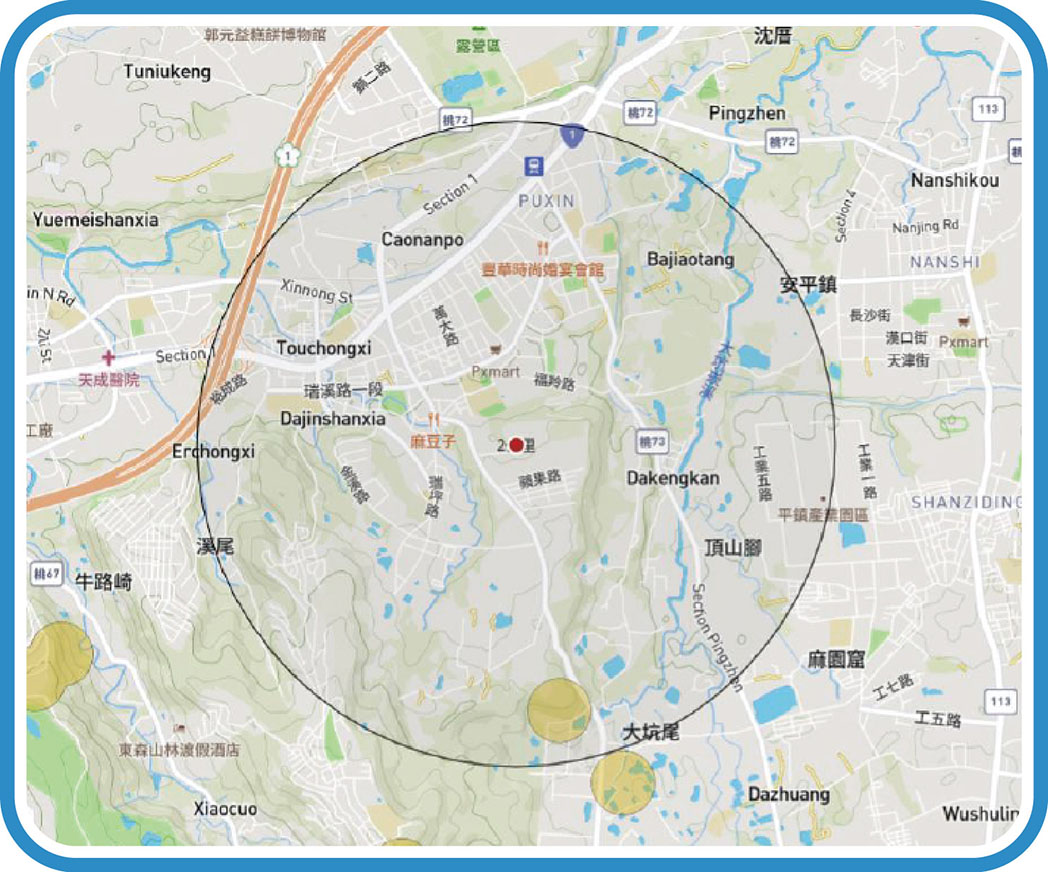
Overlap Percentage of Spatial Overlay with Key Location Sensitivity Data
(Very High and High-Medium Sensitivity)
Location Sensitivity 5 – Important Wetlands of National Importance
(0.2%)
Location Sensitivity 5 – Landslide and Environmentally Sensitive Areas
(0.4%)
Location Sensitivity 4 – Taiwan Ecological Network Core Areas
(60.9%)
Location Sensitivity 3 – Taiwan Ecological Network Focus Area
(99.8%)
Location Sensitivity 3 – Red List Threatened Plant Species Distributio
(1.0%)
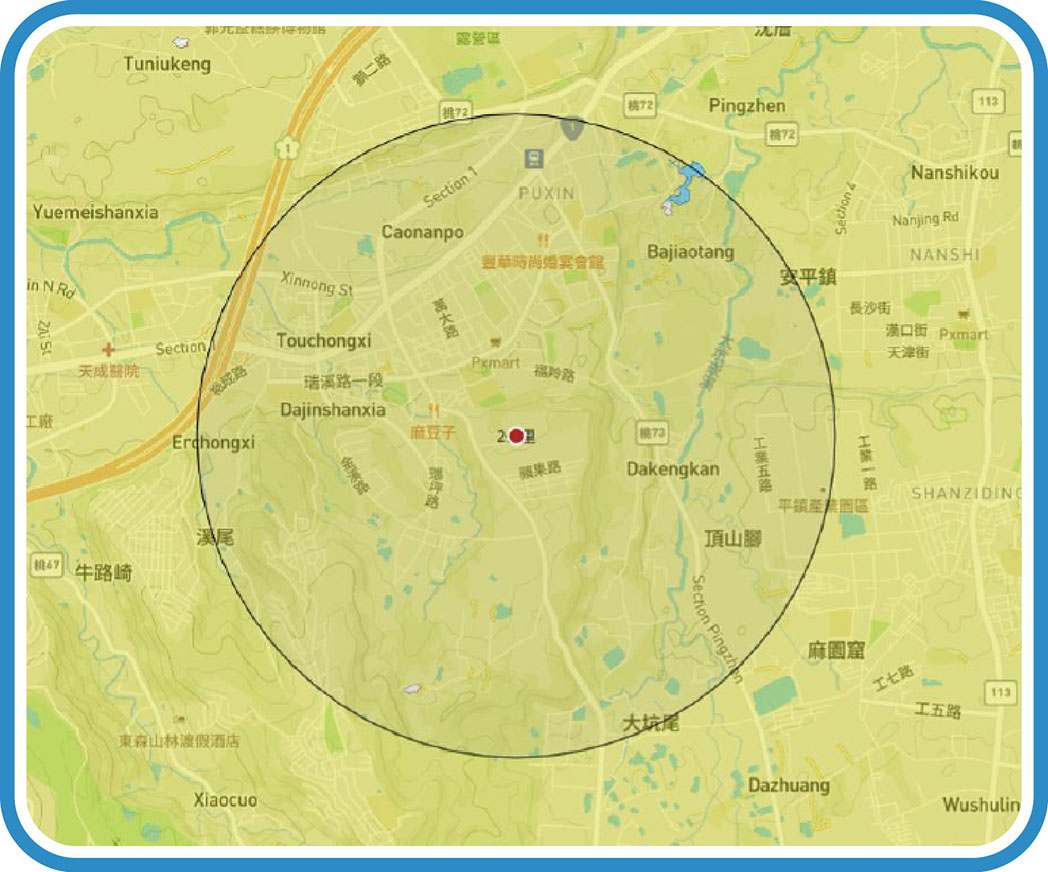
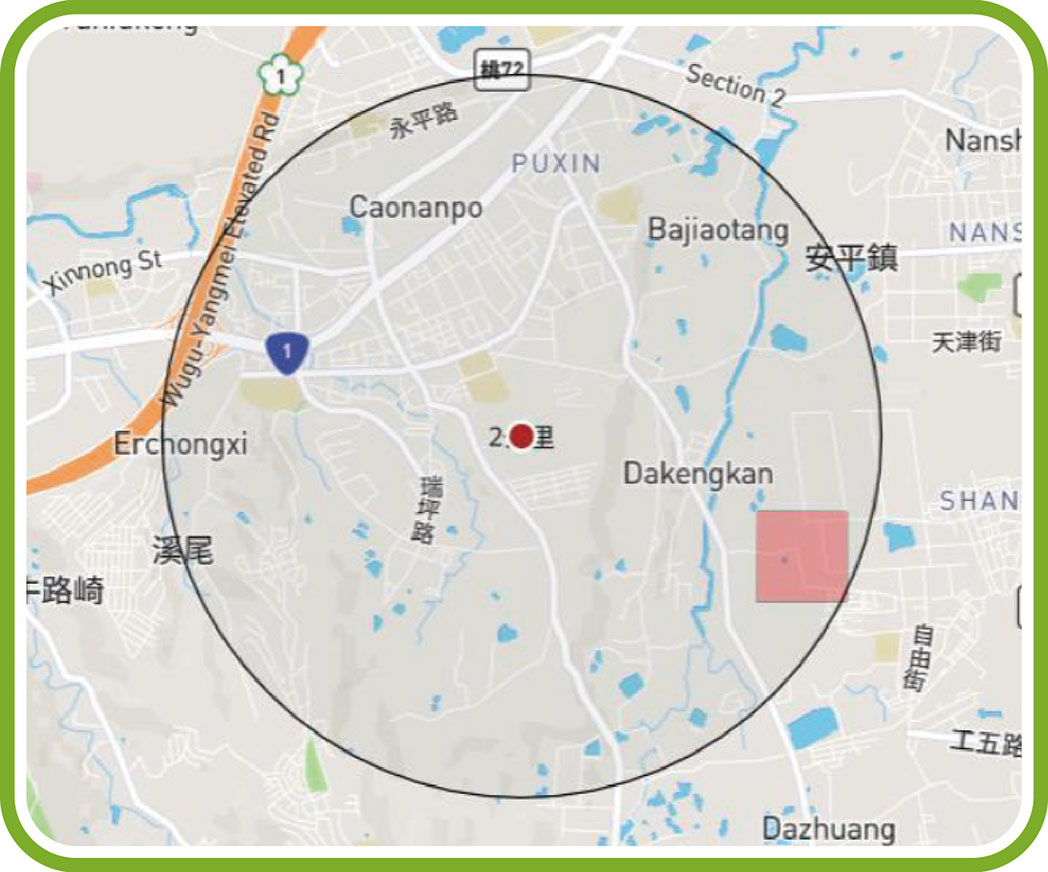
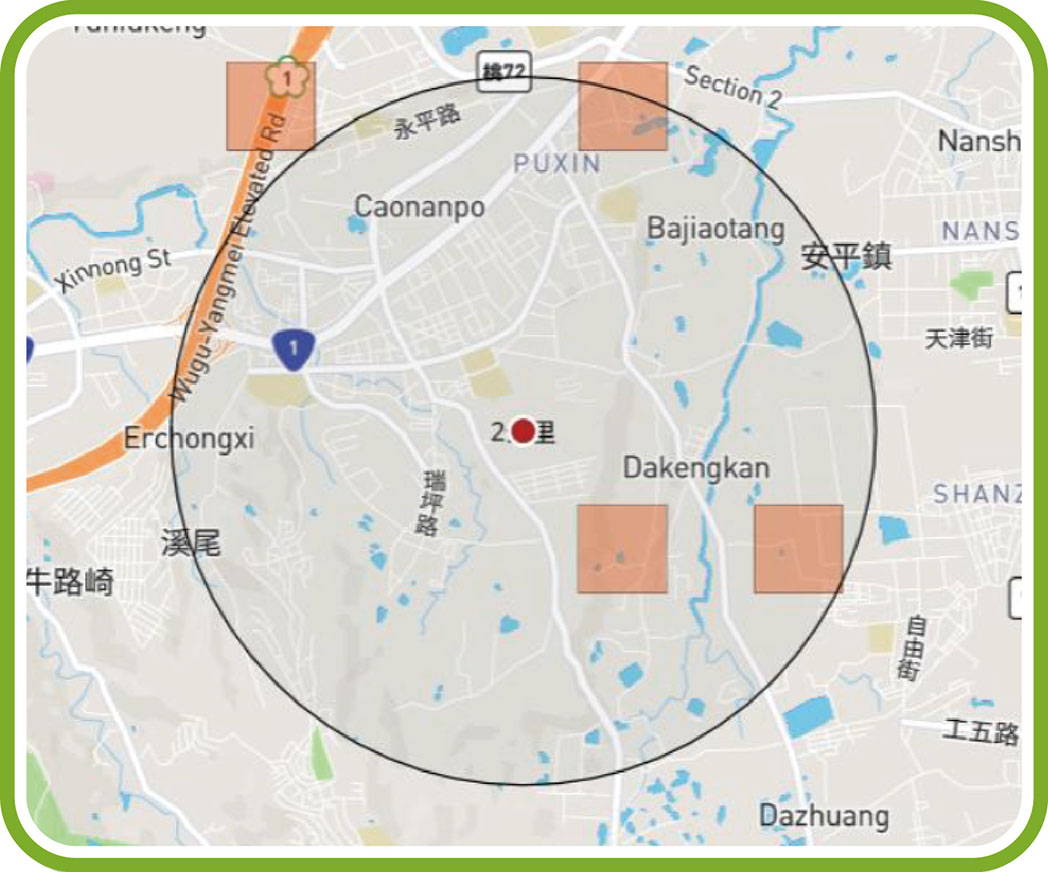
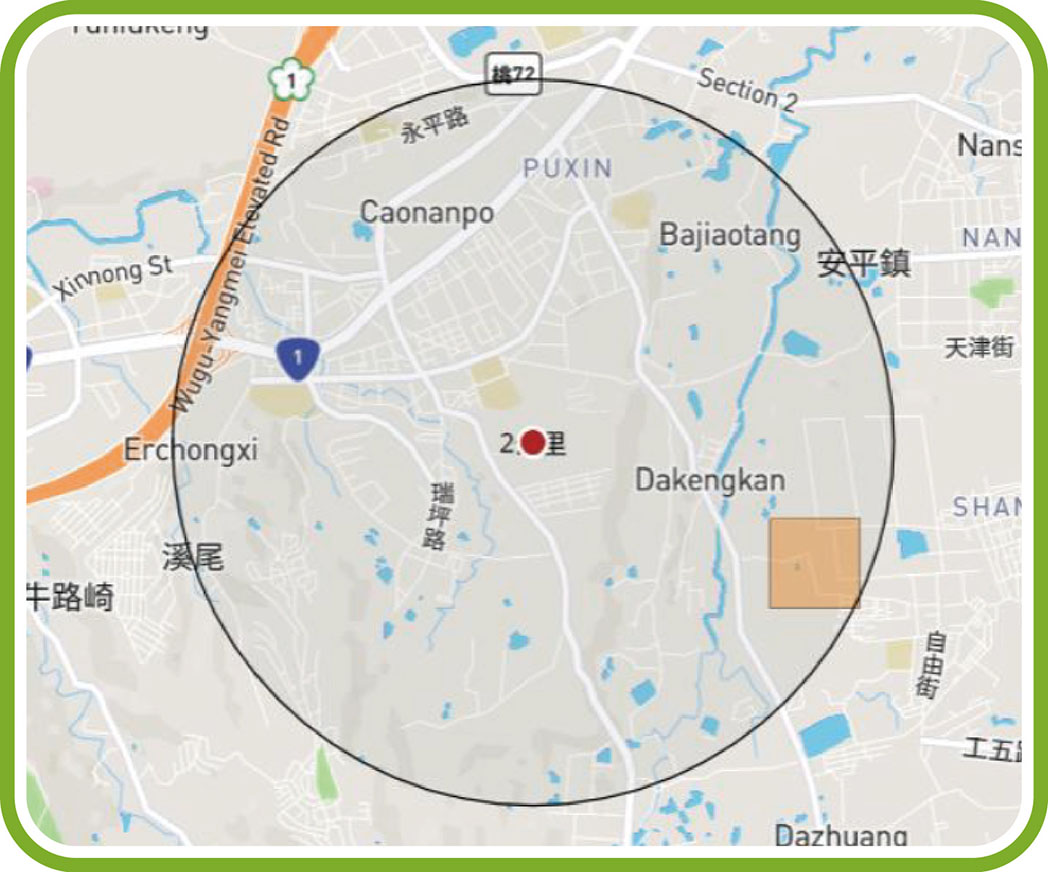
Overlap Percentage of Spatial Overlay with Key Species Sensitivity Data
(Very High and High Sensitivity)
Species Sensitivity 5 – Plants (Critically Endangered / CR)
(5.3%)
Species Sensitivity 4 – Animals (Endangered / EN)
(2.0%)
Species Sensitivity 4 – Plants (Endangered / EN)
(28.3%)
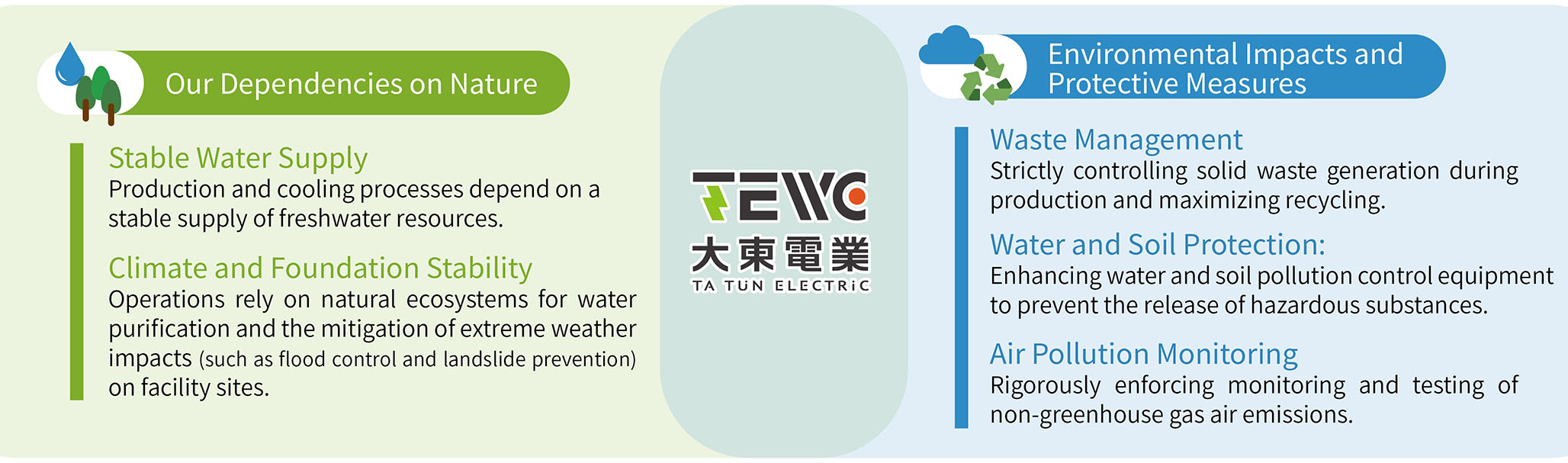
Bidirectional Interaction Between the Cable and Wire Manufacturing Industry and the Natural Environment
In accordance with the international TNFD LEAP methodology (Evaluate phase), the Company utilizes authoritative databases including WWF and ENCORE to objectively identify the bidirectional interaction between the cable and wire manufacturing industry and the natural environment. We gain deep insights into our operational dependencies on natural resources while implementing rigorous protective measures to manage potential environmental impacts—fulfilling our commitment to sustainable operations.